
[re] ⪫ once more media ⪪ medium [tion] ⪫ noun in action
medium defined
- means and material for communicating
- substance an organism lives in or is cultured in
- person communicating between living and dead
- balance between extremes
SO…
medium is the “how” of communication. New means and materials are compared with the previous versions. And this is the idea expressed with remediation. We make comparisons in part because the old is familiar. We have collective memories of these ex-mediations. If something is too new, if forces us to examine the medium and we can miss the message. It makes the communication opaque rather than transparent.
and…
medium implies environments. While certainly we now speak of digital spaces and environments that we interact in. If we appropriate the word cultured in a different use, we see that media and communication are the vehicles for culturing (teaching) our children about who they are within the collective of humanity. We live within mediums, now and since we first made attempts to transplant an idea from one person to another. Since we first made attempts to communicate.
and…
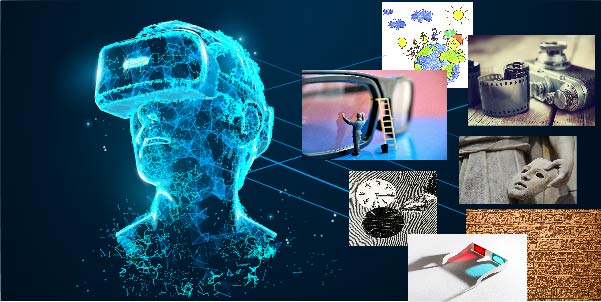
mediums connect past and present. We honor our ancestry, our legacy, our memory. Remediation is seen as some as replacement of the past, but if extreme, it is evolution from what we were to what we will be. More though we try to revivify what is dying or dead. We breath life into our cultural heritage, bring relevancy to our experiences and lives.
and…
medium is desirable as we oscillate between extremes, navigating the rivers of social interaction and relationships. We learn through trial and error, by compare and contrast, by categorizing things as similar and different. We learn by exploring both sides of a thing. Progress, though is more often gained by cooperation and collaboration. We move forward by finding a middle way.
[re]mediation then is the use available means and materials to communicate what is valuable to our lives, and connect who we are now with who we were, all while balancing the extremes so that we can be clear in what we are trying to express.
another lens…
remediation can also mean cure…heal…reform…improve
remediation restores something and makes it better. While we could take a view that it is simply to improve the means and materials we use in communication, I don’t think so.
We have a need to connect with others and enhance our sense of belonging. We also need to find meaning in our lives. Our greatest endeavors as humans have been to meet these needs. Remediation then is our continued and collective work to connect in a meaningful way. It is an intervention to the process of division and disconnection, something that seems timely.
The interplay of immediacy and hypermediacy as examined by Bolter and Grusin’s in the initial part of Remediation provides a call for mediation as a balance between the extremes of what can become deceptive immediacy or an unconscious suspension of disbelief, and the overwhelming deluge of stimuli that can drown us. The call though is really for [re]mediation, meaning that it must recur. It is an act of centering each time we catch ourselves (individually or collectively) toward extremes.
so…

The ideal goal is not to be perfectly balanced if we think of balance as a static point, as we often do. Think more of the idea of balanced in motion.
The ideal is to become experts in intentionally shifting the balance of extremes to create a particular effect. Balancing immediacy and hypermediacy.
We must become the practitioners of Mediated Rhetoric. To persuade yes, but also to teach. To highlight and obscure as needed to emphasize and enhance our connection. To foster a meaningful life. To reunite us with our memory. To connect us to our humanity.

 Creating Dissonance
Brian,
This post is beautifully written, both visually and in its content. My favorite section is where you say:
“We have a need to connect with others and enhance our sense of belonging. We also need to find meaning in our lives. Our greatest endeavors as humans have been to meet these needs. Remediation then is our continued and collective work to connect in a meaningful way. It is an intervention to the process of division and disconnection, something that seems timely.”
My post was about disconnects that I might attribute to a dance between immediacy and hypermediacy, while you expounded upon the connectedness found through the evolution inherent in remediation. I prefer your view. 🙂
I do, however, wonder about our stories, which used to be told orally directly from those within our communities now being told through the capitalistic lense of advertising, which is the backbone of all digital communication, it seems. I see the beauty in remediation and am a huge fan of technological advances and the ways in which we become connected with people we would otherwise never meet. However, I wonder what your take on the flip side would be.
I guess I find the complexity of the duality of this issue to be fascinating, as well as the varied responses we each have to the same text and would be interested in what you might think. Detra (Dee)
LikeLiked by 1 person
Brian,
Thank you for circling this back to why this all matters. Although the reading this week was fascinating, I think this is something that could have been better detailed by Bolter and Grusin. As human beings we need connection with one another. In a world that is becoming increasingly connected, these concepts introduced to us by Bolter and Grusin are very timely. There is much opportunity to employ these different concepts in how we interact in the digital world.
-Caitlin
LikeLiked by 1 person
Hi Brian,
Great post, I especially appreciate your alternate definitions for remediation and how they also apply and lead to your final paragraph. Yes, it is more than persuading others. It is teaching, it is making others feel. I think Foucault’s definition of geneology from the footnotes also applies here: “an examination of descent,” which “permits the discovery, under the unique aspect of a trait or a concept of the myriad events through which – thanks to which, against which – they were formed” (22). Understanding where we come from, how we got here (with respect to digital media or otherwise), is an important aspect to connect to!
LikeLiked by 1 person