Rhetoric is the purposeful use of written, spoken, and visual text.
Digital means we get to [re]mix those elements in a way to tell better stories. Our stories. And digital means we get to share them with more people. Digital allows for the exponential growth of culture, of a collective experience. Of a collective memory we get to [re]mediate infinitely. And so we are challenged to look at who owns culture. Who owns experience? Digital opens up challenges to oppression. But we still have significant issues related to access.
While freeing, most is not free. There is a price point to access.
The take aways from this class, focused on and conducted through digital means have changed me. It is an interactional process. Both with all of you and with technology. I am different. The technology I engage with is different.
This semester has been both a divergent and convergent experience. I feel like I have both more to focus on and am more focused on specific aspects.
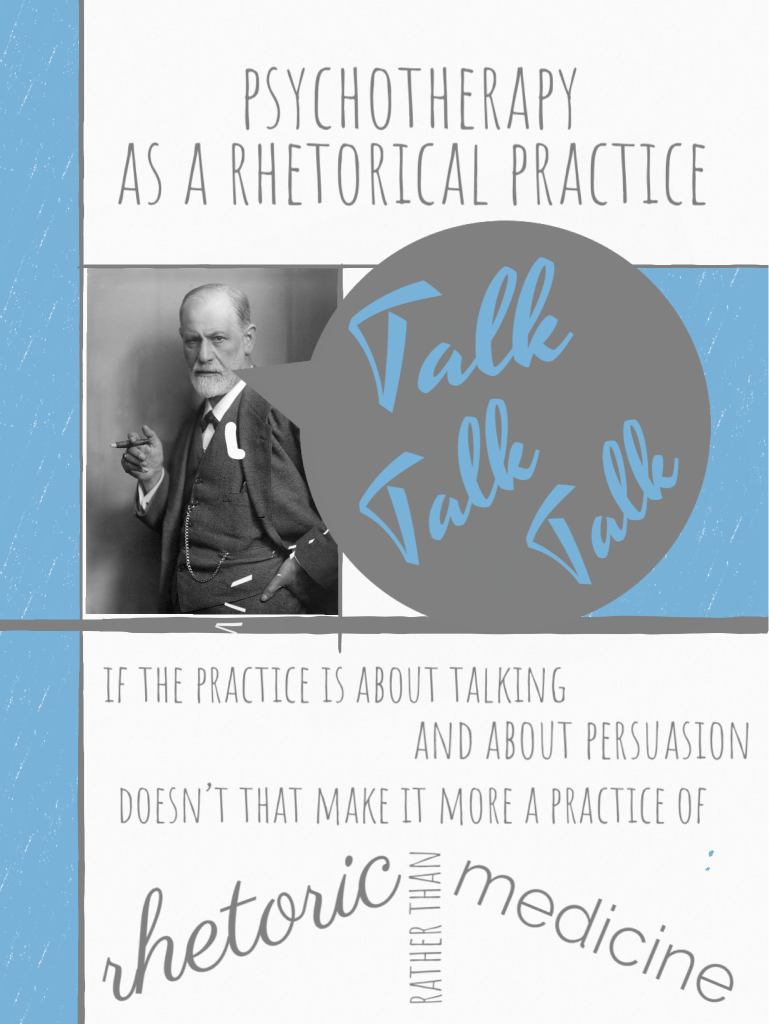
Stigma and the act of stigmatizing others has been a primary focal point, both in this class and in my other course this term. I focused on that as my final paper there…Psychotherapy as a Rhetorical Practice. I am grateful for all our discussions around access, fairness, [dis]ability and the like. They influenced the direction of that work immensely.
I also have [re]visited artifacts from my other courses last semester with the frame of digital rhetoric. I think there is an immediacy to all this technology that I didn’t realize to such an extent. I feel like I am always aware of the fact I am using technology when I am using it. But it really can disappear.
The visuals I have created have highlighted the immediacy experience for me…and yet having the digital color box and pen/brush/marker box all within a flick of a digital pencil is full of hypermediacy.
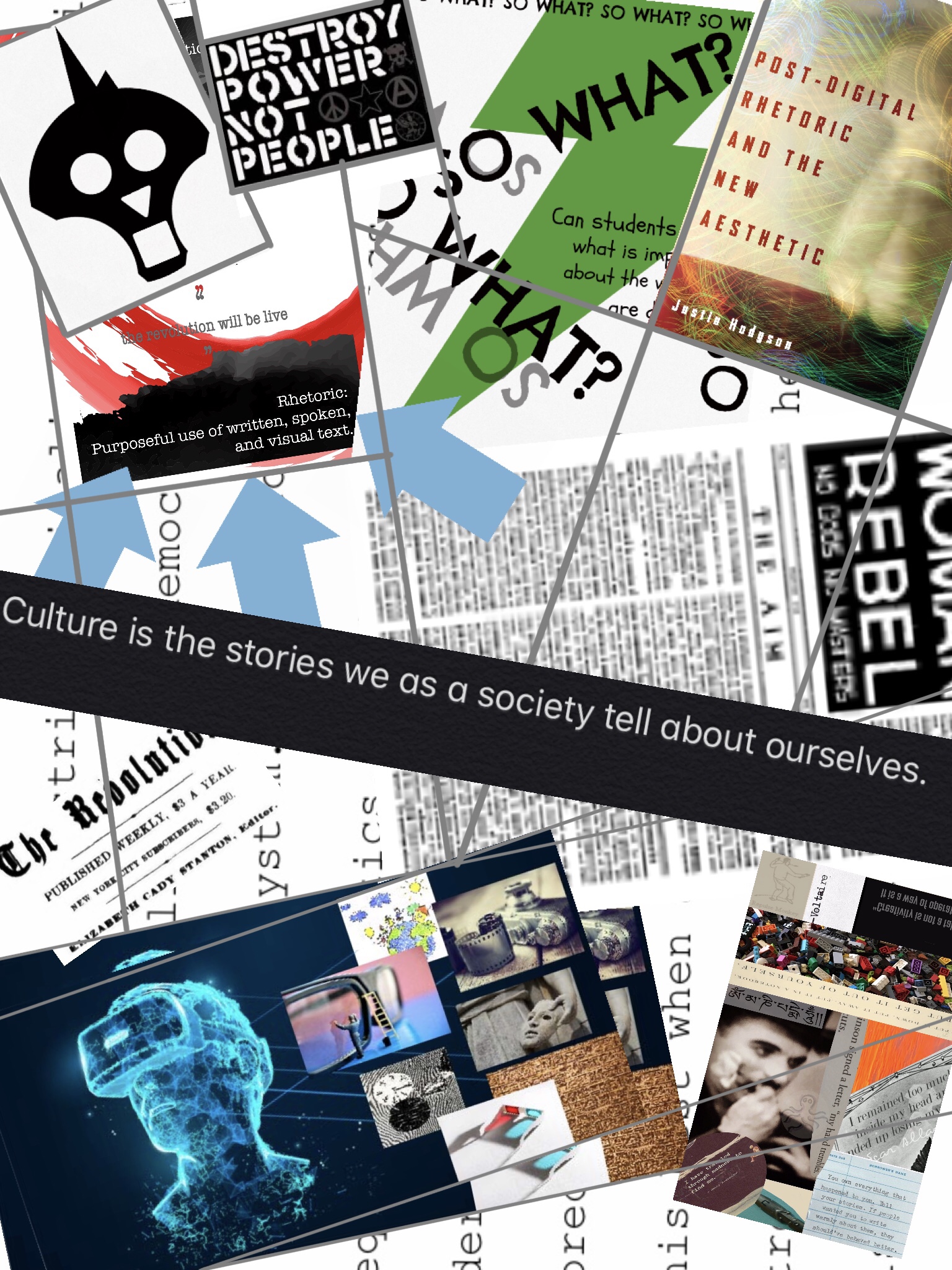
The top image is a bricolage of images from in my photos app. Most are from this class though a few are from past projects. It gives a representational reflection, a mirror if you will, of my change during and because of this class and the interactions.
This last image is one I created during writing block on my Psychotherapy as a Rhetorical Practice.
People tend to want to fix, to solve, to make better. This is a human aspect, but one that requires people first to identify a problem, or find a flaw. This has led to great accomplishments, innovations, and advances in technology. Wonder after wonder at the hands of people.
Not all people can see, or hear, or walk, or talk, or…
People have fantastic and amazing abilities. They though, are not their abilities.
Yet people are defined by their abilities, and by the accomplishments their abilities bring forth.
People obsess over this idea of productivity and fixate on achievement.
It’s a race that must be won.
The chorus only of We are the Champions by Queen
A race where to not be first means to be forgotten. Where if you don’t win you’re a loser, an outcast, a reject. Defective. A less-than. A glitch.
And people have become so very good at seeing differences as wrong or bad. As abnormal.
Different is frightening and anything different is a threat.
And so people work to solve the problem. To fix the glitches. People want to make the problem go away. Make it inconsequential. Invisible. So they don’t have to be scared.
But what happens when people identify a person as the problem?
What happens when we identify someone as the problem?
Well, we shift uncomfortably and then identify lack of access as what needs fixed.
And the solution is technology. And, we get to feel better. We high-five and clap each other on the back. We praise the technology that has opened doors and broken barriers. And technology has done that.
But it isn’t enough.
It doesn’t address what we choose to ignore. That lack of access is not the underlying problem.
We ignore that the person who has the concern or problem isn’t leading the conversation. That we need to be invited into the conversation by them. That we need to listen to their experience.
Instead we close the gate and deny access, perpetuating the underlying problem.
There are three basic patterns or approaches for person-to-person interaction.
Doing to
Doing for
Doing with
Focusing on lack of access as the problem in regard to disability results in doing to and doing for, with technology as the tool. From a psychological stand, doing to and doing for both send a message that the person is less than, incapable, or incompetent.
Focusing on lack of access as the problem regarding disability sends the message that the person is incapable and technology is the savior.
Doing to and doing for continue the kind of thinking that leads to oppression and suppression. It leads to ablebodied privilege and associated rhetoric. Bonnie Tucker talked about reading into phrases like giving a voice to the voiceless and giving hope to the hopeless. These phrases ring of good intention and sound sweet, but the core of the phrases are bitter. They label the object of the sentence as voiceless and hopeless.
It may be better to say…return the voice to those who have had it stolen. But this still seems to have a privilege angle.
If I have the power to return your voice then I have the power to take it again. It still places me in power over you. It implies that I own your voice. I still am doing something to you or for you. I maintain my privilege.
It also alleviates me of taking responsibility of stealing it in the first place. I don’t have to look at the way I have stripped another person of their autonomy, their freedom, their choices. It means I get to retain my position. I get to maintain my sense of superiority.
And we do this. Regardless of our status or our position. Regardless of how “woke” we proclaim to be. We identify those who we can deem less-than and prop up our position in relation to them.
We give lip service to tolerance but we continue to do to others. We talk about acceptance but we continue to do for others.
But we can change this. Elise Roy in her Ted Talk discussed moving from a frame of increasing tolerance to a frame of becoming an alchemist or magician focused on the real problem. I felt this was similar to Justin Hodgson’s idea of being a tinkerer and engaging a willingness to play. Both talk about the willingness to fail and fail often. To essentially fail forward.
Roy’s idea of design thinking has five steps.
identify the problem
observe the problem
brainstorm possible solutions
experiment with prototypes
implement a sustainable solution
Roy goes on to highlight design as an interdisciplinary and multiperspective experience.
Roy hints the best approach is what I understood to be a “beginners mind” common in dialogues on mindfulness and meditation. Practices that can help us to loosen our egos and what Roy calls premade solutions.
These premade solutions are the ones Tucker discusses as part of the technocapital disability rhetoric, which mistakes fixing access with addressing the civil rights and social justice issues present in society.
Roy and Hodgson’s ideas of becoming alchemists and tinkerers are much better positioned to foster a doing with approach that can begin to address those issues Tucker identified.
And I think another entity needs to be included into the dynamic. Technology itself can be part of the process rather than seen merely as a tool or as a means to an end.
Hodgson proposed the interaction between humans and technology is collaborative. Each is affected and changed by the interaction. Adopting a design thinking approach including technology as a partner, could have an impressive result. One allowing us to “look sideways,” as Warren Berger might say, at the social problems we continue to face despite all our success in improving access.








 Creating Dissonance
You must be logged in to post a comment.